Twelve Indie Presses, Twelve Pubs: A Winter 2026 Crawl for the Terminally Curious
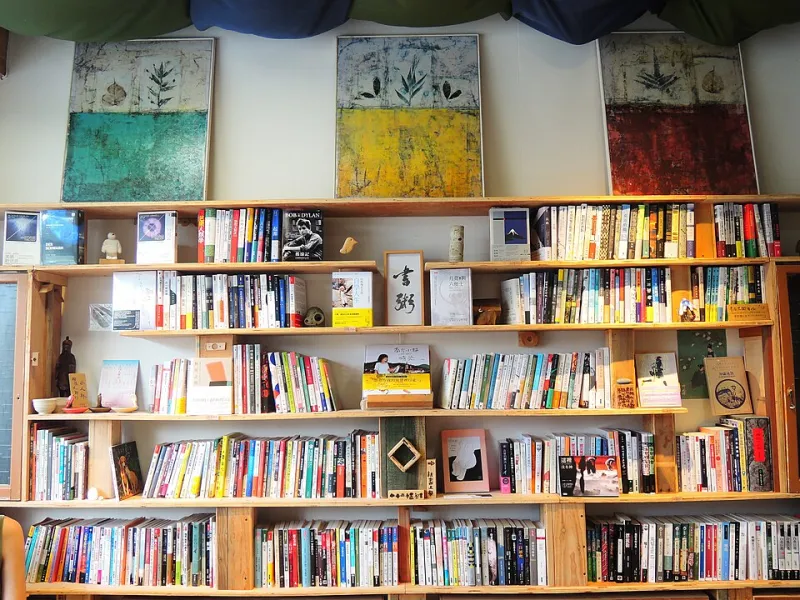
Photo: 舟集 Toadboat, CC BY-SA 4.0, via Wikimedia Commons
Winter is the correct season for an indie press crawl. Not because small-press books are chilly — they are, if anything, over-insulated with adjectives — but because November is when the post still arrives before Christmas, and January is when you actually read the things.
So here is Von Krummp's entirely partial route through twelve small UK publishers whose 2026 catalogues are doing something odd and doing it beautifully. Buy direct where you can. The margin on a £9.99 paperback is thinner than the paper it's printed on, and a direct order is often the difference between a second printing and a fond farewell.
Why a crawl rather than a list
A list is passive. You scroll it, you nod, you forget it by Thursday. A crawl implies movement, a tote bag with a broken handle, and the purchase of one book you did not plan for. It also implies a pub, which is the only bit of infrastructure the UK book trade has never had to subsidise.
The three rules
- One book per press. Otherwise you buy seven Fitzcarraldos, discover they are all 900 pages, and read none of them.
- Buy direct at least half the time. Amazon will survive without you. A two-person press with a franking machine will not.
- End near a fire. This is not negotiable in November.
The twelve, with one book and one pub apiece
The novella wing
Fitzcarraldo Editions (London) — the blue-and-white paperbacks that made translated literary fiction look like a design movement. Their 2026 list continues the house habit of publishing books that are shorter than the blurb written about them. Pub: The Betsey Trotwood, Clerkenwell, where the upstairs room has hosted more readings than some universities.
Peirene Press (London) — novellas in translation, designed to be read in the time it takes to lose an argument about the Booker. Their catalogue notes are almost as good as the books, which is a rare compliment. Pub: The Lamb, Bloomsbury, for the wood panelling and the low hum of people pretending to edit manuscripts.
Galley Beggar Press (Norwich) — the press that proved an enormous novel with no full stops could sell, and has been cheerfully unpredictable since. Their short story prize remains one of the few worth entering without a pseudonym and a stiff drink. Pub: The Fat Cat, Norwich, a short stagger from the station and a shorter one from a second pint.
The short-story quarter
Nightjar Press (Manchester) — single stories, stapled, limited, gone. Nicholas Royle's chapbooks are the closest thing British publishing has to a collectible crisp packet, and I mean that with total affection. Pub: The Marble Arch, Manchester, tiled, Victorian, and correct.
Comma Press (Manchester) — short fiction as a civic duty. Their city-themed anthologies have quietly done more for the form than most prize ceremonies. Pub: The Castle Hotel, Manchester, where the tiling is a suitable backdrop for arguing about endings.
Influx Press (London) — the scrappy, questioning end of independent publishing, fond of anthologies built around a single stubborn idea. Pub: The Wenlock Arms, Islington, for a pint and a reckoning about the state of things.
The poetry corner
Penned in the Margins (London) — poetry, cross-arts, and pamphlets that behave like gig flyers. If a collection comes with a seed packet, this is probably where it started. Pub: The French House, Soho, where you will be asked to remove your hat and your opinions.
Renard Press (London) — eclectic, brisk, unbothered by genre. Their list looks like the contents of a very good second-hand bookshop that has decided to publish.
Fairlight Books (Oxford) — literary fiction with an online journal attached, which means you can read half their authors for free and then feel obliged to buy the book. Correct behaviour. Pub: The Rickety Press, Jericho, for pizza and the illusion of academic productivity.
The wildcards
Bluemoose Books (Hebden Bridge) — Yorkshire, family-run, allergic to cynicism, responsible for putting several excellent novels into the hands of people who then press them on strangers. Pub: the Trades Club, Hebden Bridge — technically a social club, do not write in.
Dead Ink Books (Liverpool) — experimental, northern, permanently interested in writers the London trade has overlooked. Pub: Peter Kavanagh's, Liverpool, a pub with more nooks than a novel with subplots.
Cheerio Publishing (London) — small, curious, gently contrary. The sort of list where the back-cover copy seems to have been written by someone who has actually read the book. Pub: any of them, honestly. It has been a long crawl.
How to buy without bankrupting yourself
Set a budget in advance and write it on your hand. Paperbacks are your friend; hardbacks are your friend's shelf. Sign up to press newsletters in November and you will be told, with endearing honesty, exactly when the last copies are going. Order by the second week of December if you want anything to arrive under a tree. And remember that a £12 pamphlet from a two-person press is better value, culturally speaking, than four novels bought in a supermarket huff.
Four questions to ask a small-press editor
They will love you for asking these, and you will learn more than any catalogue can teach you.
- Which of your books can't you persuade shops to stock?
- What's the print run, and is there a second one coming?
- What's the book you'd hand me if I only had a tenner?
- Who's the author you think will be nicked by a big house in 2027?
A wet Saturday, roughly
Norwich in the morning, train to London, one book in Bloomsbury and one in Soho, then home with a paper bag and the pleasant guilt of having spent money on something small and strange. If you're northern, swap in Manchester and Hebden Bridge and add a waterproof.
One last thing
Almost everyone running these presses has a day job, a mortgage, or both. A crawl is a nice afternoon for you and a small, real vote of confidence for them. Buy the odd book. Read it in a pub. Tell someone about it.