No Homework, No Shame: How to Run a Reading Night That Doesn't Feel Like Coursework
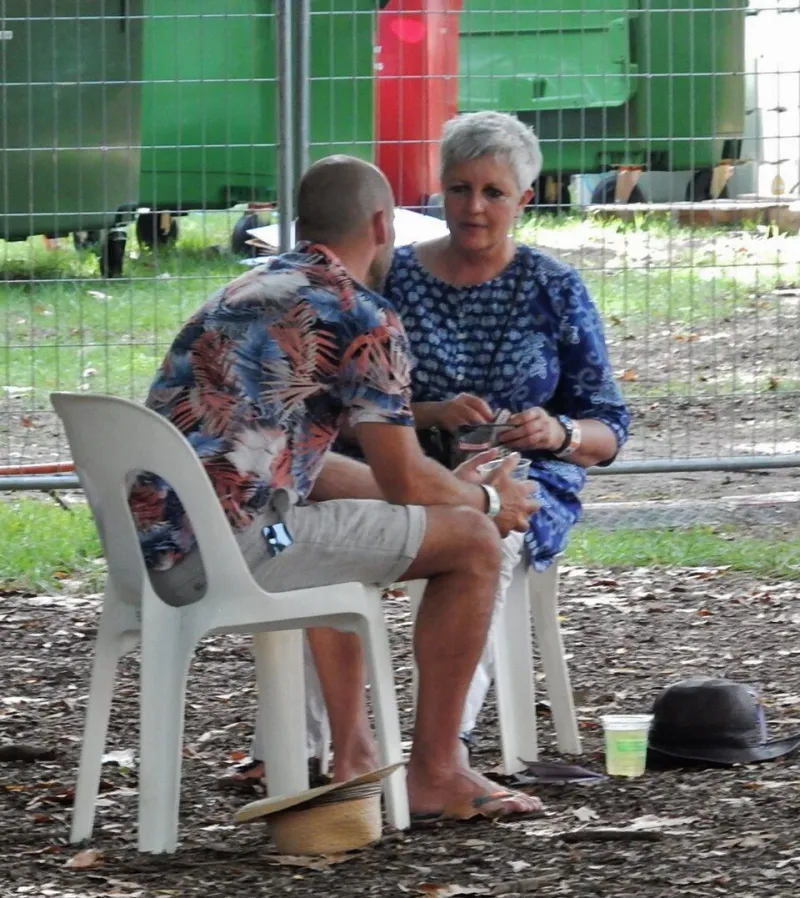
Photo: Michael Coghlan from Adelaide, Australia, CC BY-SA 2.0, via Wikimedia Commons
Let us be blunt about the traditional book club. It is a lovely idea wrapped around a small engine of guilt. Someone chooses a 600-page doorstop. Half the group does not finish it. Two people finish it and one of them hated it. Everyone spends the evening performing having-read-it, and the actual conversation about the book takes eleven minutes, bookended by forty on somebody's kitchen extension.
We think there is another way, and it involves removing the one ingredient nobody actually enjoys: the homework.
The Core Idea: Bring a Book, Not a Brief
The anti-book-club runs on a single rule. Nobody assigns anything. Everyone turns up with a book they have actually read, are reading, or have merely been carrying around with a vague sense of intention. You talk about it for three minutes. Nobody is quizzed. Nobody is shamed.
What this does, quietly, is remove the failure state. There is no 'I didn't get to it' because there was nothing to get to. Attendance stabilises almost immediately, which is more than can be said for most reading groups, where a missed month tends to become a missed year.
Five House Rules Worth Printing Out
- No set texts. Say it out loud at the first meeting so nobody introduces one by accident in March.
- Three minutes each, timed. Use a phone timer. Three minutes is generous and the ticking is funny.
- Unfinished books are first-class citizens. 'I gave up on page 60 because...' is one of the most useful things anyone can say in a room.
- One interruption rule. Questions at the end, not throughout. This is the single change that stops the evening turning into six separate conversations.
- No scoring. Out of ten is a review format. This is not a review format.
Themes That Actually Generate Conversation
A theme is not a set text. It is a filter. It gives people a reason to bring something odd and, crucially, it lets them bring something they were going to read anyway.
- Books with terrible covers. The 1970s fantasy cover with the wrong dragon. The celebrity memoir with the author's own face at a strange angle. Rich territory, and roughly 4,000 candidates in any charity shop.
- The author's least famous work. Everyone has read the famous one. Nobody has read the other one. This theme alone can power an entire year.
- Books bought and never read. Bring it. Admit it. Explain the purchase. This is group therapy with better prose.
- Books with a number in the title. Lowbrow, high-yield.
- Something a relative pressed on you. The most emotionally loaded theme we have ever run, and by some distance the most popular.
- Books under 200 pages. A gift to anyone who has had a busy month, which is everyone.
- Best opening line, regardless of the rest. Cheating has never been so productive.
- The 'wrong season' theme. A beach read in November, a ghost story in June. Mildly disorienting, reliably funny.
Icebreakers That Don't Make Anyone Want to Leave
Skip anything involving 'an interesting fact about yourself'. Instead, try one of these on arrival, while coats are still being removed:
- The Bookshelf Confession. Name one book on your shelf you are actively lying about having read.
- The Wrong Gift. The worst book anyone has ever given you.
- Page 1, Line 1. Read the first sentence of your book aloud, no context, no title.
- The Desert Island Reject. Which classic would you happily never read again, and why?
Two or three of these is plenty. The point is to get everyone talking before the three-minute turns begin, so that the quietest person in the room has already spoken once.
Where to Hold It (Beyond the Obvious)
A pub back room remains undefeated: free, warm, and the ambient noise usefully swallows the sound of one enthusiastic person holding forth. But the anti-book club suits odder rooms, because there is no projector and no whiteboard and therefore nothing to be intimidated by.
Try a café after closing (ask; they often say yes for a guaranteed ten covers), a church hall with a faulty heater, a member's kitchen with too many chairs, the function room of a bowling club, or — gloriously — a laundrette on a Tuesday. Bookshops will often host for free if the group agrees to buy one paperback each on the night. That is, frankly, the cheapest rent in Britain.
Working With an Independent Bookseller (Do This)
This is the part most reading groups get wrong, and it costs them nothing to get right.
- Ask, don't assume. Independent booksellers are not a vending machine. A short email explaining your group, your numbers and your dates will get you a warmer reply than a demand for a discount.
- Bring the theme to them. Ask if they will build a small table of books matching your month's theme. It is free merchandising for them and a talking point for you.
- Buy the book you talked about. If someone raves about a title, the group buying it that week is the entire economy of independent retail in one gesture.
- Invite them once a year. A bookseller talking for fifteen minutes about what is not selling and why is more interesting than most author events.
- Never ask for sale-or-return. It is a small ask that reads as a large one. Just buy the books.
A Von Krummp Starter List for the First Night
Eight titles, all short-ish, all slightly odd, none of them a set text because you are bringing them voluntarily:
- Cold Comfort Farm — Stella Gibbons
- The Diary of a Nobody — George and Weedon Grossmith
- Miss Pettigrew Lives for a Day — Winifred Watson
- Excellent Women — Barbara Pym
- The Hearing Trumpet — Leonora Carrington
- Lud-in-the-Mist — Hope Mirrlees
- The Man Who Was Thursday — G.K. Chesterton
- Diary of a Somebody — Brian Bilston
The One Thing to Get Right
End on time. A reading night that ends at 9.30pm is a reading night people come back to. One that ends at 11 is a hostage situation with wine.
And finally: the anti-book club is not anti-book. It is anti-guilt. The reading happens anyway — on trains, in baths, in the ten minutes before sleep. All the club does is give it somewhere to go afterwards. Bring a book. Say three minutes' worth. Go home lighter than you came. That is the whole method, and it has never once failed us.