Microphone Confessions: When Novelists Decide to Read Their Own Audiobooks
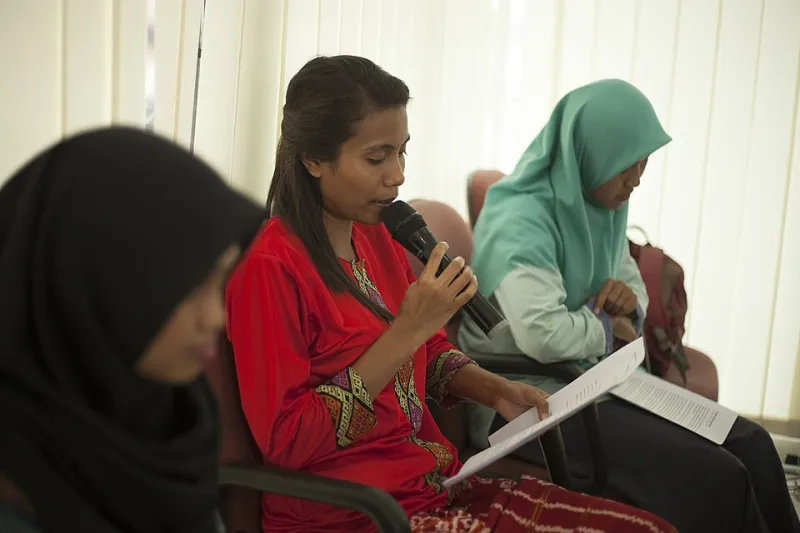
Photo: Kurnia Yaumil Fajar, CC BY-SA 4.0, via Wikimedia Commons
Somewhere between the long commute and the short attention span, the audiobook became a British fixture. It is now possible to hear a novel while doing the washing-up, walking the dog or pretending to listen to a podcast about productivity. For years, the voice doing the reading belonged to an actor — a professional who could do accents, pace a joke and say ‘he said’ without sounding surprised. Lately, more and more novelists have decided that the voice should be theirs.
It makes sense on paper. Who knows the book better than the person who wrote it? Who can pronounce the invented Welsh village correctly? Who can deliver the line that was meant to be funny before an editor got nervous? The author’s voice is a marketing gift: intimate, authentic, faintly confessional. It is also a live grenade with a bookmark.
The intimacy dividend
When author narration works, it really works. The listener gets the book as the writer hears it — the pauses, the emphasis, the slight wobble on the sentence that was difficult to write. A novelist reading their own work can make a familiar passage feel like a secret. This is especially true of memoir, autofiction and anything with a strong first-person voice. The listener is not being performed to; they are being let in.
This year’s crop of audiobooks has leaned into that promise. Several 2026 releases — particularly literary debuts and memoir-adjacent novels — have made the author’s voice part of the pitch, rather than an afterthought. The message is simple: no actor, no filter, just the person who made the thing. For indie publishers, that is catnip. It suggests authenticity without a celebrity budget. It also suggests a saving on studio fees, which is the kind of sentence that makes a finance director sit up straight.
When the author becomes a one-person panto
Then there is the other version. The author who does all the voices. The author who cannot resist a regional accent they have never previously attempted. The author who reads every line of dialogue as if the characters are arguing over the last biscuit. The author who, halfway through chapter three, remembers that they are not an actor and decides to compensate by getting louder.
There is a long and noble tradition of cautionary author narration. The cassette-era habit of poets reading their own work is a useful warning: a great poem can survive a voice like a haunted radiator, but a 12-hour novel cannot. There are author-narrated editions of well-loved thrillers in which every character sounds like the author asking for the bill. There are literary novels where the narrator’s gentle burr is perfect for the protagonist and catastrophic for the 19th-century sea captain who appears in chapter seven.
The problem is not vanity. It is usually innocence. Writing is a solitary, silent activity. Reading aloud is a performance skill, and performance skills are learned. A novelist may know exactly how a sentence should land, but knowing is not the same as doing. The microphone is unforgiving. It hears the dry mouth, the swallowed consonant, the moment the reader remembers they have not had lunch.
The indie publisher’s dilemma
For small presses, the decision is rarely simple. An author-narrated audiobook can be a genuine selling point: a direct line from writer to listener, a story worth telling in the marketing copy, a reason for a bookshop event to have a microphone. It can also be a false economy. A rushed home recording, a cheap microphone and a spare bedroom with a boiler in it do not add up to a professional product. Listeners are forgiving, but they are not saints.
There is also the question of time. Recording an audiobook properly takes longer than most people expect. There are pronunciation guides, pickup sessions, edits, and the strange experience of hearing your own prose for the tenth time and wondering who wrote it. An author who is already late with the next book may not be the best person to lock in a studio for three days.
A modest set of rules
So what should a publisher do? First, listen. Ask for a sample before committing to the whole book. Not a theatrical showreel — a plain, honest ten minutes of the actual text. Second, direct. Even a brilliant reader benefits from someone in the room saying ‘slower’, ‘warmer’ or ‘please stop doing that voice’. Third, edit. The best author-narrated audiobooks are not raw; they are shaped. Fourth, be honest about the genre. A comic novel may thrive on the author’s timing. A multi-voiced epic may need a professional cast.
And for listeners? It is worth celebrating the good ones. The author who reads their own work with restraint can make a familiar book feel newly intimate. The author who reads it with too much enthusiasm can make you long for a trained actor, a cup of tea and a quiet room. Both are part of the rich pageant of publishing.
In the end, the microphone does not care who wrote the book. It only cares who is speaking. The best author-narrated audiobooks understand that the writer is not the star; the story is. The worst forget it somewhere around chapter two, usually while attempting a Scottish accent.