Glitter, Guilt and Snow Spray: A Wanderer’s Taxonomy of the Christmas Bookshop Window
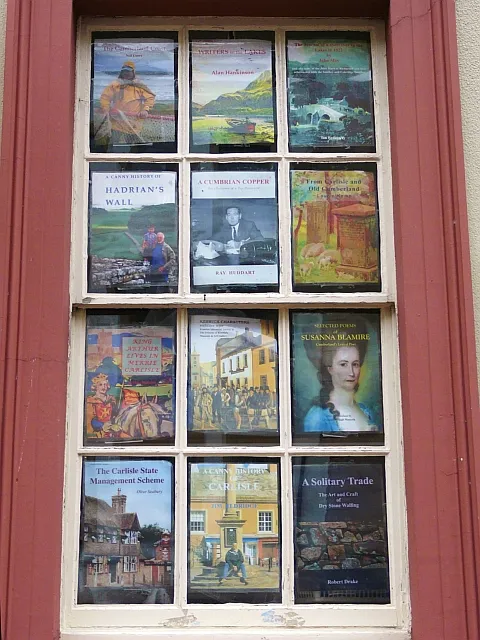
Photo: Rose and Trev Clough, CC BY-SA 2.0, via Wikimedia Commons
Every December, Britain’s bookshops divide into two camps: those whose windows look like a design studio got hold of a scalpel and a roll of quality card, and those whose windows look like a snow globe has exploded over a pile of autobiographies.
Both are valid. Only one is defensible.
A Christmas window is the most honest thing a bookshop does all year. For eleven months it can hide behind tasteful frontlist and a nice bit of mid-century furniture. In December it has to make a public statement about what it thinks books are for. Some windows say: this is an art form. Some say: please, for the love of god, buy something.
I have spent a fortnight walking past windows I had no intention of entering, which is either research or a personality flaw. Here is what I found.
A Field Taxonomy of Window Species
The Paper-Cut Purist. White card, a scalpel, an hour of somebody’s Sunday, and a fan of books arranged with the confidence of a gallery. Usually a small independent with a dedicated member of staff who is quietly furious about being called “creative”. Beautiful. Slightly intimidating. You go in and buy a hardback out of guilt and admiration.
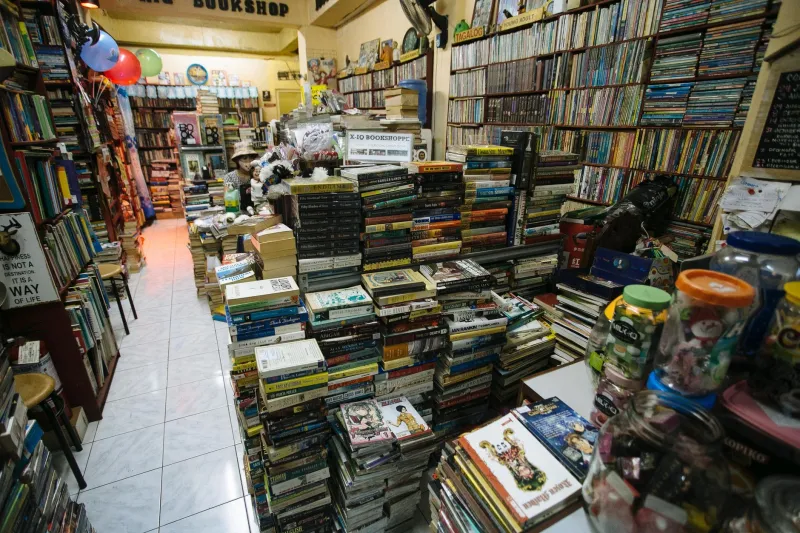
The Glitter Avalanche. Tinsel applied with a trowel, snow spray in quantities that suggest a grudge, and a mound of celebrity memoirs arranged in a pyramid like something requiring a health warning. The books are almost incidental. The message is festive and the message is loud.
The Celebrity Memoir Cairn. Not a display but a geological formation. Three for two, stacked six deep, a face on the top of every pile grinning out at the pavement. There is always one that has been there since October and is quietly fading in the light.
The Crime Doorway. Black paper, a single red ribbon, perhaps a chalk outline, perhaps a bauble shaped like a noose. The most consistently stylish windows in Britain, put together by people who understand that murder sells at Christmas better than almost anything.
The Children’s Grotto Overspill. Starts as a display. Ends as a small weather system. Contains at least one book about a bear, one about a dinosaur with feelings, and a plush item that has been sat on.
The Anti-Window. Books turned spine-in, or a single title on a bare plinth with a card explaining that the bookseller’s favourite book of the year is this one and they will fight you about it. Terrifying. Admirable. Usually correct.
The Traditionalist. Spray-on snow from a can, applied to the glass rather than the display, producing a frosting effect that has been fashionable since roughly 1974 and will never die. Contains a hand-written sign in marker pen. The sign has a spelling error. The error is part of the charm.
The Reluctant Window. One string of lights, one stack of books, one A4 printout explaining that the window display is “coming soon”. It is the 18th of December. It is not coming.
The Unofficial Awards
Best Use of a Single Prop. A shop in the north that put one small paper robin on a bare shelf next to eleven copies of the same novel, with a tiny sign reading “he has read it”. Devastating. Effective. Sold out by the following week.
Most Restrained Tinsel. Awarded, grimly, to the shop that used none at all and instead arranged books in a colour gradient from deep red to cream. The effect was so pleasing that a passing man stopped and photographed it. The bookseller pretended not to notice, then watched him from behind the till for four minutes.
Bravest Snow Spray. A window in which the spray had clearly gone wrong, been wiped, gone wrong again, and been left as a sort of abstract cloud. Honesty of this order deserves recognition.
Most Ambitious Failure. A suspended book installation that had, by mid-December, become a slightly diagonal book installation. Nobody had the heart to fix it. It read as intentional. That is the definition of a successful window.
What the Window Says About the Year
A Christmas window is a summary of the trade’s mood, written in sellotape. This year’s batch is notably short on extravagant centrepieces and notably long on the words “signed edition” and “limited stock”. There is a lot of non-fiction. There is more humour than usual, which tends to happen when the news has been grim. There are, as ever, several books by people who are famous for something other than writing, and several more by people who are famous for being famous, and everyone knows exactly which pile they are in.
What is missing, in most windows, is anything challenging. December is not the month for the difficult novel. December is the month for the book you can hand to an uncle. Booksellers know this and arrange accordingly, and the good ones arrange it beautifully, which is a craft skill that nobody has ever adequately praised.
A Practical Note, O Reader
If you see a window you like, say so. Not on the internet — in the shop, out loud, to the person standing behind the till with the roll of sellotape. They will look embarrassed. They will also remember it in February, when nobody says anything nice to them at all.
And if you see a window you do not like — the pyramid of memoirs, the snow spray, the fading face of a man off the telly — go in anyway. Buy a novel. Buy two. It is Christmas, the margins are thinner than the tinsel is thick, and somewhere behind that display is a bookseller who has been on their feet since half seven and has a paper-cut robin to get home to.
That is, in the end, the only review of a window that matters.