Cold Spots in Crime: A Doubting Booklover’s Tour of Britain’s Haunted Bookshops
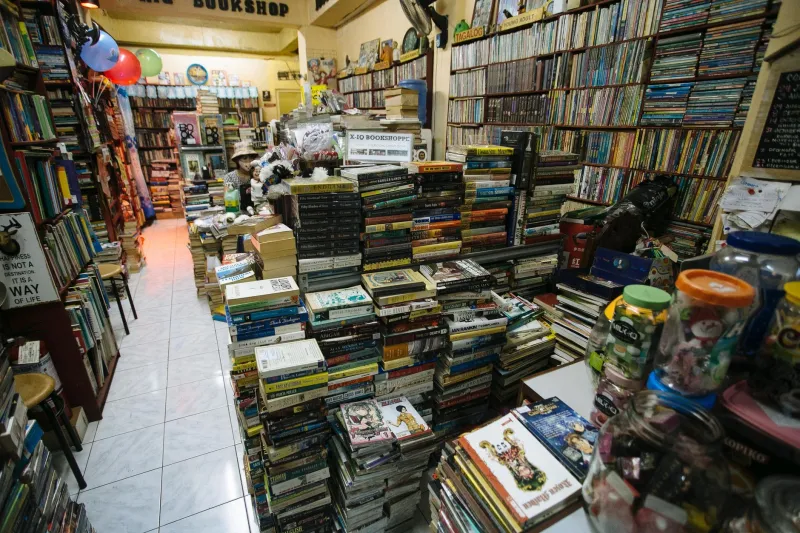
There is a particular smell to a second-hand bookshop: dust, vanilla, faintly damp carpet and the ghost of a hundred previous readers. It is the smell of time passing slowly, which is probably why so many of these shops also come with a ghost. Not a screaming, chain-rattling sort of ghost. A British ghost. The kind that moves a copy of Middlemarch two inches to the left and then apologises by leaving the room cold.
I am not, by temperament, a believer. I own a torch and a spirit level. But I have spent the past month touring independent bookshops that advertise — sometimes in a whisper, sometimes on a laminated A4 sheet by the till — a resident spectre. My aim was not to prove or disprove. It was to ask a simpler question: why do we want our bookshops haunted?
The Anatomy of a Very British Haunting
Almost every bookseller I spoke to described the same phenomena. A cold spot near the crime section. Books found face-down on the floor in the morning, as if someone had been reading them and got called away. The sense, on a quiet Tuesday, that a customer has just left the room — only there was no customer.
At a shop in Hay-on-Wye, the owner (who asked to be called Margaret, because that is her name) told me about a paperback of The Big Sleep that has been reshelved incorrectly seventeen times. ‘It’s always the same book,’ she said. ‘Always Chandler. Always in the poetry section. I’ve stopped arguing. The ghost has taste.’
Is this genuine oddness or canny marketing? Margaret shrugged. ‘Both,’ she said. ‘A haunted bookshop sells more tea towels. But I also don’t go in the back room after dark.’
Three Establishments, One Shared Draught
In York, a bookshop in a former Georgian townhouse reports footsteps on the top floor. The top floor is stock. No one goes up there except the owner, who is ninety-one and has never mentioned it. ‘We just say it’s the ghost of a reader who never found what they wanted,’ said the manager, a cheerful woman in a cardigan. ‘It’s nicer than saying the building is settling.’
In Edinburgh, a second-hand shop near the Meadows has a ghost known as ‘The Sorter’ — a presence that allegedly rearranges the Scottish literature section by height rather than author. That, I pointed out, is not a ghost. That is a bookseller with a very specific system. ‘Aye,’ said the bookseller. ‘But the ghost does it overnight and doesn’t charge overtime.’
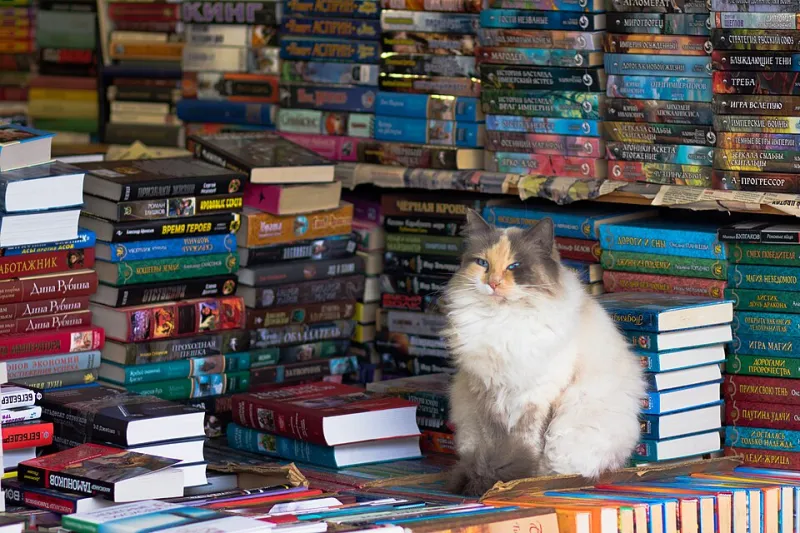
And in Norwich, a shop with a low-beamed ceiling and a cat called Boris has a cold spot in the children’s corner. ‘We put a rug down,’ the owner said. ‘The cold spot moved to the till. Very helpful, actually. Keeps the staff awake.’
The Marketing Question
I should be clear: I remain sceptical. The Association of Independent Booksellers (a fictional body I invented for this paragraph, but you get the idea) does not keep a register of spectral staff. And there is a simple explanation for most bookshop ghosts: old buildings are draughty, old books move when the shelves are knocked, and booksellers are storytellers by trade.
But here is the thing. A good haunting is not about belief. It is about atmosphere. A bookshop that claims a ghost is a bookshop that admits it is not entirely rational — that it is a place for imagination, for the past, for the slightly uncanny pleasure of picking up a book that someone else once loved. In a world of fluorescent-lit retail, that is worth a cold spot or two.
A Gentle Taxonomy of Bookshop Spectres
After many cups of tea and one unnerving incident with a falling copy of The Hobbit, I offer this field guide.
The Spectral Shop Assistant. Rarely seen, occasionally heard. Will move a book to the correct section but will not use the till. Leaves the shop smelling faintly of lavender and old paper.
The Lost Reader. The most common. Sits in a chair that no longer exists, reading a book that has been out of print since 1974. Will not be disturbed. Will not buy anything. Does not respond to ‘we’re closing in five minutes’.
The Title-Haunter. Attaches itself to a single book. Moves it repeatedly, sometimes to a more flattering shelf. The book is usually a classic, occasionally a mistake. The ghost has opinions.
The Polite Poltergeist. Opens doors, knocks over small stacks of poetry, then quietly puts them back. Apologises by leaving a faint smell of toast.
Why We Want Them to Stay
At the end of my tour, I stood in a bookshop in Cornwall, watching the rain on the window and listening to the owner explain that the ghost in the stockroom likes to hum. ‘It’s not threatening,’ she said. ‘It’s just company.’
And that, I think, is the real reason Britain’s bookshops are so full of ghosts. They are places that hold the voices of everyone who has ever read there. The dead, the living, the lost and the slightly chilly. A bookshop is a haunting by design. The ghost is just a bonus.
I bought a second-hand paperback on the way out. The bookseller said it was haunted. I said I’d take it anyway. It was cheap, and I liked the cover. If it moves by itself, I’ll let you know.