What Britain Leaves Between the Pages: An Unauthorised Bookmark Bestiary
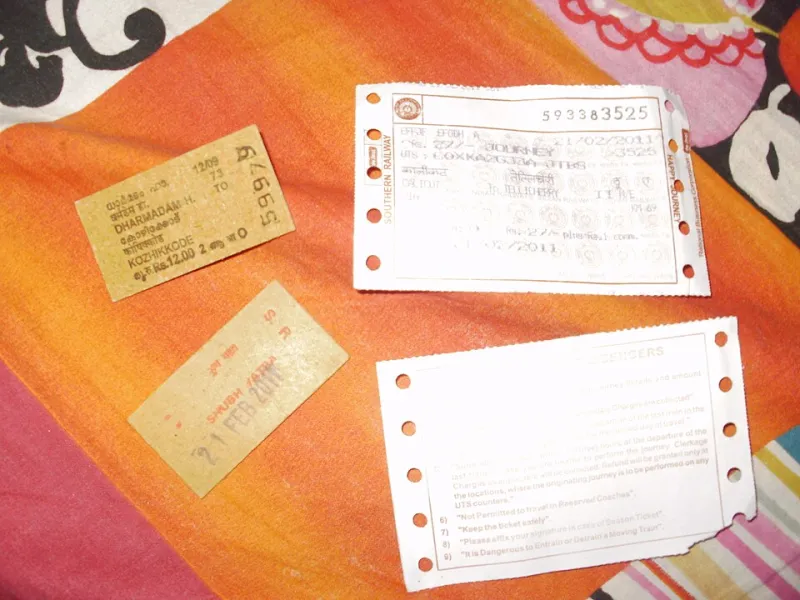
Photo: Lalsinbox, CC BY-SA 3.0, via Wikimedia Commons
There is a moment, familiar to every reader in Britain, when a book must be put down and no proper bookmark can be found. What happens next reveals a great deal about national character. In a country that invented the railway timetable and the queue, we are curiously relaxed about using a used ticket to hold our place in a novel. The bookmark, it turns out, is less a stationery item than a small archaeological record of daily life.
The Transit Ticket: A Fare to Page 184
The single most common improvised bookmark remains the train ticket. It has everything: a date, a destination, a faint sense of regret about the price. Booksellers report finding them in second-hand paperbacks with the solemnity of a passport stamp. One ticket for Leeds to Doncaster, used to mark the start of a chapter, becomes a tiny memoir of a journey interrupted by prose.
Bus tickets are the humbler cousin: smaller, flimsier, often orange. They tend to fall out at the worst moment, usually in a waiting room, leaving the reader to reconstruct their place by memory and guesswork. In 2026, as paper tickets grow rarer, the ones still pressed into books feel almost like antiques. A reader in Bristol told me she keeps a bus ticket from 2019 in a battered copy of Middlemarch, not because she needs it, but because 'it remembers the bus better than I do.'
The Receipt Relic: Proof of Purchase, Proof of Reading
Charity-shop receipts are the sentimental favourite. They carry the price of the book, the name of the shop and a date that often predates the reader's ownership by years. There is something quietly moving about finding a receipt for 80p from a shop that has since changed hands, tucked into a novel that has since changed lives.
Supermarket receipts are less romantic but more revealing. A list of milk, bananas and a reduced sandwich beside a chapter of Persuasion is a portrait of a Tuesday. The receipt does not judge. It simply records that reading, like shopping, is part of the ordinary business of living.
Botanical Pressings: The Romantic Option
Pressed flowers and leaves are the bookmarks that people admit to using. They suggest walks, gardens and a certain willingness to sacrifice a hydrangea for literature. The results are often beautiful and occasionally disastrous: a damp leaf can leave a brown ghost across a page, a small permanent shadow of the walk that caused it.
There is also the feather. Found on a pavement, carried home, placed carefully at chapter twelve. It is the closest thing Britain has to a bookmark with spiritual pretensions. It never stays flat, and it always looks slightly surprised to be indoors.
The Emergency Teabag: A National Institution
The teabag bookmark is not a myth. It is a practical response to a crisis. The reader has made tea, the book is open, the bookmark is missing, and the nearest object is a teabag still in its paper wrapper. In it goes. The wrapper keeps the pages dry; the tag hangs out like a tiny flag of surrender.
Booksellers speak of finding teabags in donated books with a mixture of horror and respect. One recalled a copy of a crime novel with a Yorkshire Tea tag at page 47. 'It felt less like a bookmark and more like a confession,' she said. The teabag is the British bookmark at its most honest: provisional, thrifty and faintly absurd.
The Library Slip: A Borrowed Life
Overdue library slips and date stamps are the bookmarks of communal reading. They remind us that a book has been elsewhere, been handled by strangers, been due back on a Tuesday in March. In 2026, as more libraries digitise their systems, the paper slip is becoming a relic. Finding one is like finding a postcard from a vanished bureaucracy.
What the Bestiary Tells Us
These accidental placeholders are not merely clutter. They are evidence of thrift, sentimentality and a stubborn belief that reading should fit around life rather than the other way round. A proper bookmark says 'I am a person who reads.' A train ticket says 'I was late, I was reading, and I could not find anything else.' The second is more British.
So the next time a receipt falls out of a second-hand novel, do not throw it away immediately. Look at the date. Imagine the journey. Then find a proper bookmark, or, failing that, an emergency teabag. The book will not mind. It has seen worse.