The Spare-Room Shelf: Britain’s Most Honest Bookcase

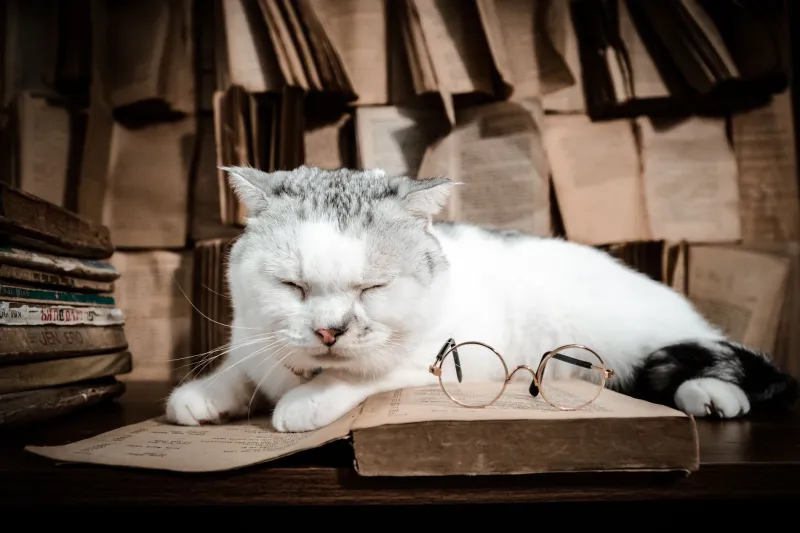
Photo: cosy British guest bedroom bookshelf with old paperbacks and hardbacks, soft lamp light, via i.pinimg.com
Britain does many things well: queueing, apologising, inventing biscuits with names like "malted milk" and then behaving as if they are ancient Saxon relics. But nowhere is our national character more legible than on the spare-room bookcase. It is a shelf assembled by accident, guilt and the law of available horizontal surfaces. It is also, if you read it correctly, a remarkably honest document.
A guest bedroom is not a library. It is a holding pen for books that have failed to find a permanent home elsewhere: the inherited hardback nobody has opened since 1987, the holiday paperback with sand in the gutter, the self-help manual bought in January and quietly buried by February. Together they form an accidental collection that says more about the household than the good towels ever will.
The Anatomy of an Accidental Library
Spend a night in enough British spare rooms and patterns emerge. The books change, but the categories are reassuringly stable.
The Inherited Hardback
This is usually a chunky volume with a cracked spine and a bookplate naming someone who died before you were born. It may be
The Concise History of Somewhere, a leather-bound Dickens, or a dictionary so old it defines "wireless" as a miraculous new invention. Nobody has read it. Nobody will read it. It is there because throwing away a book inherited from a great-aunt feels like a criminal act, and because it makes the room look as if it belongs to a family with a past rather than a person with a spare duvet.
The Sun-Creamed Holiday Paperback
Every guest shelf has at least one novel that has clearly been to Portugal. Its cover is bleached, its spine is cracked in three places, and page 112 still carries the faint memory of factor fifteen. These books are the literary equivalent of a fridge magnet: proof that someone once had a lovely time, and that the evidence was never tidied away. The title is usually something like The Olive Grove Affair or Summer at the Vineyard, and the plot has been generously forgotten by everyone concerned.
The Strategic Self-Help
Here the guest shelf becomes quietly suggestive. A copy of a book about tidying up, placed beside the bed, is not merely a book. It is a polite hint. A volume on "mindful living" may be intended as inspiration, but it can land like a gentle audit of your host's opinion of your life choices. The self-help book is the passive-aggressive houseplant of the spare room: attractive, well-meant, and faintly accusatory.
The Universal Thriller
Every spare room contains one thriller that everyone has already read. It is usually a paperback with a blurry silhouette on the cover and a quote from a newspaper saying "gripping". You have read it. Your host has read it. The neighbour has read it. It sits there like a conversational comfort blanket, available in case a guest finishes their own book and requires something familiar at eleven o'clock at night.
The Guidebook to Somewhere You Are Not Going
A 1990s guide to Bruges. A walking guide to the Peak District with a torn map. A phrasebook for a country that has since changed its currency. These books are not practical. They are nostalgic furniture. They suggest a household that once planned adventures and now mainly plans Ocado deliveries.
The Family Memoir
Sometimes the shelf includes a slim, privately printed memoir about a branch of the family tree. It is not for you. It is not really for anyone. But it is there, and if you open it you will find a photograph of a stern couple outside a bungalow in 1962 and a sentence about "Auntie Muriel's remarkable collection of tea caddies". This is the guest shelf at its most intimate: a book that expects nothing and explains everything.
What the Shelf Is Actually Saying
The guest-room bookcase is often discussed as a failure of curation. In fact, it is a small essay in hospitality. A host who leaves a shelf of random books is saying: make yourself at home; we are not going to interrogate your reading choices. A host who leaves a single, perfectly chosen novel is saying something else: I have thought about you, and I have opinions.
There is a fine line between welcome and judgement. The spare-room shelf should not feel like a reading list set by a disappointed teacher. It should feel like a bowl of fruit: something to pick at, not a test. The best guest shelves are generous, slightly odd and completely unpretentious. They include a short book for the exhausted traveller, a funny book for the insomniac, a local history for the curious, and perhaps one strange volume that invites a question at breakfast.
What these shelves reveal about national taste is not that Britain is a nation of literary giants or philistines. It is that we are a nation of reluctant discarders. We keep books because they were gifts, because they were bargains, because they remind us of a person or a place or a version of ourselves who once intended to read Middlemarch on a rainy weekend. The guest shelf is the soft landing place for all that good intention.
A Modest Manifesto for the Guest Shelf
If you are stocking a spare room, or quietly auditing one before Christmas, here is a short and entirely unscientific guide.
- Keep it small. Five to seven books is plenty. A groaning shelf implies homework; a modest stack implies choice.
- Mix the moods. One novel, one non-fiction curiosity, one short story collection, one local guide, one book that is simply funny. A guest should be able to read for ten minutes or three hours.
- Avoid the ambush. Do not leave a book about decluttering beside the bed unless you are prepared for your guest to leave with a nervous twitch and a sudden urge to organise your airing cupboard.
- Add a note. A handwritten card saying "borrow anything" is worth more than a first edition. It turns a shelf into an invitation.
- Include one oddity. A book of British sea-shanty lyrics. A guide to keeping bees. A history of the teapot. Guests remember the oddity long after they have forgotten the bestseller.
- Check the spiders. Hospitality begins with a quick dust and ends with the removal of anything that scuttles.
The spare-room bookshelf will never be a perfect library. It will always contain a paperback that has been to Spain and a hardback that has never been to the end of its own first chapter. But with a little thought, it can become something better than perfect: a shelf that says, quietly and without fuss, we are glad you are here. And if it also contains one thriller everyone has already read, so much the better. It gives you something to talk about over the toast.