Before the Book Deal: Britain’s Novelists and the Curious Power of the Former Job
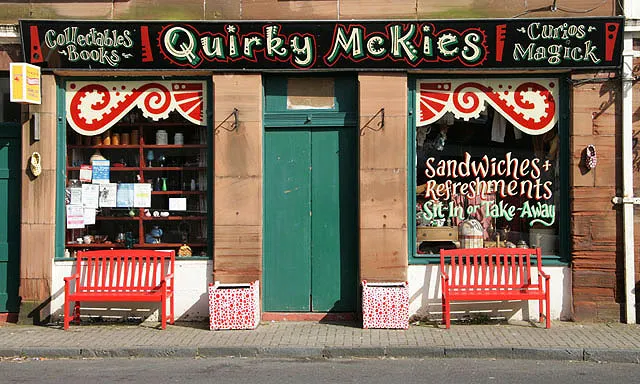
Photo: Walter Baxter , CC BY-SA 2.0, via Wikimedia Commons
There is a sentence on British author biographies that has become as dependable as a queue at a service station: Before turning to fiction, she worked as a tax inspector. Or a funeral director. Or a call-centre team leader in Swindon. The former job is no longer a stray fact tucked under the photograph; in 2026 it is often the first thing we are told, a small promise that the novel ahead will contain either authentic paperwork or an unusually well-organised murder.
I spoke to four novelists about the jobs that came before the book deals. Not because former careers explain everything — they do not — but because the reading public has developed a hungry interest in the author as a person who once had a lanyard. The question is whether this is useful context, clever marketing, or simply the latest way to judge a book by its biography.
The Biography as a Back-Cover Blurb
Marianne Pike, a Leeds-based novelist whose debut was set in a regional tax office, spent eleven years at HMRC. She is careful about the way her old job is sold. 'The bio says tax inspector, which sounds wonderfully severe,' she says. 'What I actually did was spend a lot of time explaining to people why a form had to be filled in twice. It was less noir, more stationery.'
Pike believes the former job has become a kind of shorthand. Readers see tax inspector and expect precision, secrecy and perhaps a body in the archives. What they get, in her case, is a novel about ordinary people trapped in systems. 'The job taught me that bureaucracy is not a background detail,' she says. 'It is a plot engine. Every form is a small threat.'
That is the first leak: vocabulary. Former jobs do not just provide settings; they supply the rhythm of dialogue. A tax inspector learns to ask a question twice in different ways. A funeral director learns to leave silence in the right place. A call-centre worker learns that the phrase I completely understand can carry an entire weather system of menace.
Funeral Directors Know About Timing
Callum Rees, who ran a family funeral business in Cardiff before publishing two crime novels, is now routinely described as a 'former funeral director' in festival programmes. He does not object, but he does find the label funny. 'It makes me sound like a man who arrives at parties in a black coat and a cloud of gravity,' he says. 'I mostly drove a van and made tea.'
Still, the job left marks. Rees writes scenes that know when to stop. His chapters are short, his pauses deliberate. 'You cannot rush a funeral,' he says. 'You cannot rush a good chapter either. Both need someone to open a door at the right moment.'
He thinks the current appetite for former-job bios is partly a reaction to the polished author photograph. 'A nice headshot tells you nothing. A former job tells you the writer has been out in the world, probably been shouted at, and definitely filled in a timesheet.'
The Call-Centre Is a Plot Engine
Priya Nair wrote her first novel in forty-minute chunks between calls at a customer service centre in Manchester. Her bio now says she 'worked in telecommunications', which is technically true and dramatically underpowered. The novel itself is full of voices: overlapping, interrupted, oddly polite. 'A call centre is a novel waiting to happen,' she says. 'You have a stranger on the line, a script you must follow, and a queue behind them. That is plot.'
Nair worries that the former-job label can become a cage. 'If I write a book about a gardener next, will the bio say former call-centre worker turned garden novelist? Probably. It is easier to sell a before-and-after than a writer who simply keeps changing.'
This is the marketing question at the heart of the trend. A former job gives reviewers a neat angle and readers a neat expectation. It also gives publishers a way to make a literary novel sound like a true-life dispatch. The biography becomes a genre label: tax inspector fiction, funeral director noir, call-centre comedy.
Librarians, or the Original Metadata Specialists
Duncan Lowe spent nine years in a Bolton branch library. His bio describes him as a former librarian, which is accurate but incomplete: he was also the person who unjammed the photocopier, fielded questions about printer ink, and once found a lost ferret in the returns bin. His novels are quietly obsessed with order and misfiling.
'Librarians are not quiet people,' he says. 'We are people who have learned to be quiet while a child screams near the picture books. That is excellent training for a novelist. You develop a very patient inner voice and a very impatient outer one.'
Lowe thinks readers like former-job bios because they suggest the novel has been earned rather than merely imagined. 'It is nonsense, of course. Imagination is work. But the biography says: this person has stood behind a counter. That feels reassuring in a country that still trusts a queue.'
When the Former Job Becomes the Genre
The risk is not that authors lie about their old jobs. The risk is that we start to read them too neatly. A former funeral director does not have to write about death; a former librarian does not owe us a cosy mystery in a village with a suspiciously well-organised cake sale. The biography is a doorway, not a contract.
Still, the trend says something about British reading culture in 2026. We are suspicious of the purely literary author, the one who seems to have been grown in a writing shed. We like a writer who has done a shift, been on hold, filed a report, buried someone with dignity, or explained the printer to a stranger. It makes the book feel connected to the world outside the bookshop.
Pike puts it best. 'The old job is not the novel's source,' she says. 'It is the soil. You do not see the soil when you look at the flower. But you would notice if it wasn't there.'
Which is a far more elegant sentence than most of us manage after a day at work. Perhaps that is the real lesson: the former job does not make the novelist. It merely gives the biography a useful little hook — and gives the rest of us something to argue about in the queue for the till.